Luigi Ontani
Retratto
Year : 2014
Dimensions : maschera cm 62x31x14, acquarello cm 67x52, diagonale cm 86
Technique : painted wood sculpture by Pule and watercolor
Authentication : authentication on photo by Luigi Ontani
Short Review
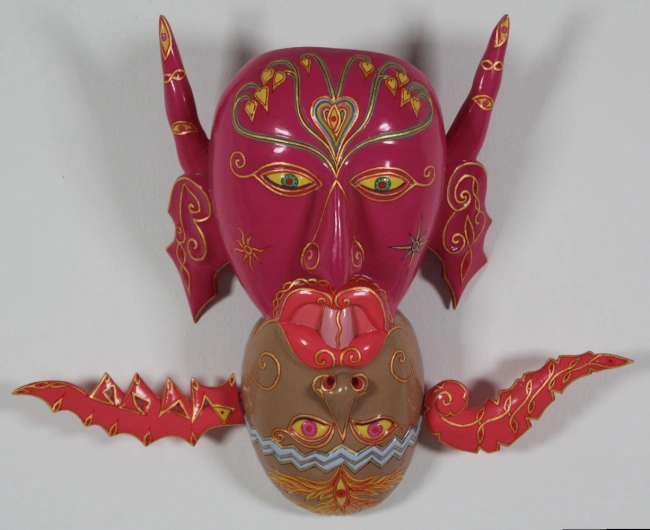
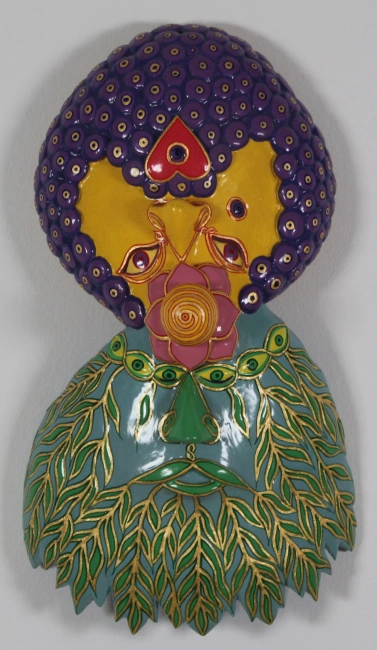
This work is part of a series of polychrome masks created by Ontani using techniques and materials native to the island of Bali—a place he has visited, and continues to visit, to this day. The materials employed include *pule* wood—a soft, easily worked timber—and natural, non-synthetic pigments. To produce these pieces, Ontani collaborates with local artisans known as *mascherai* (mask-makers), who are the inheritors of a centuries-old tradition.
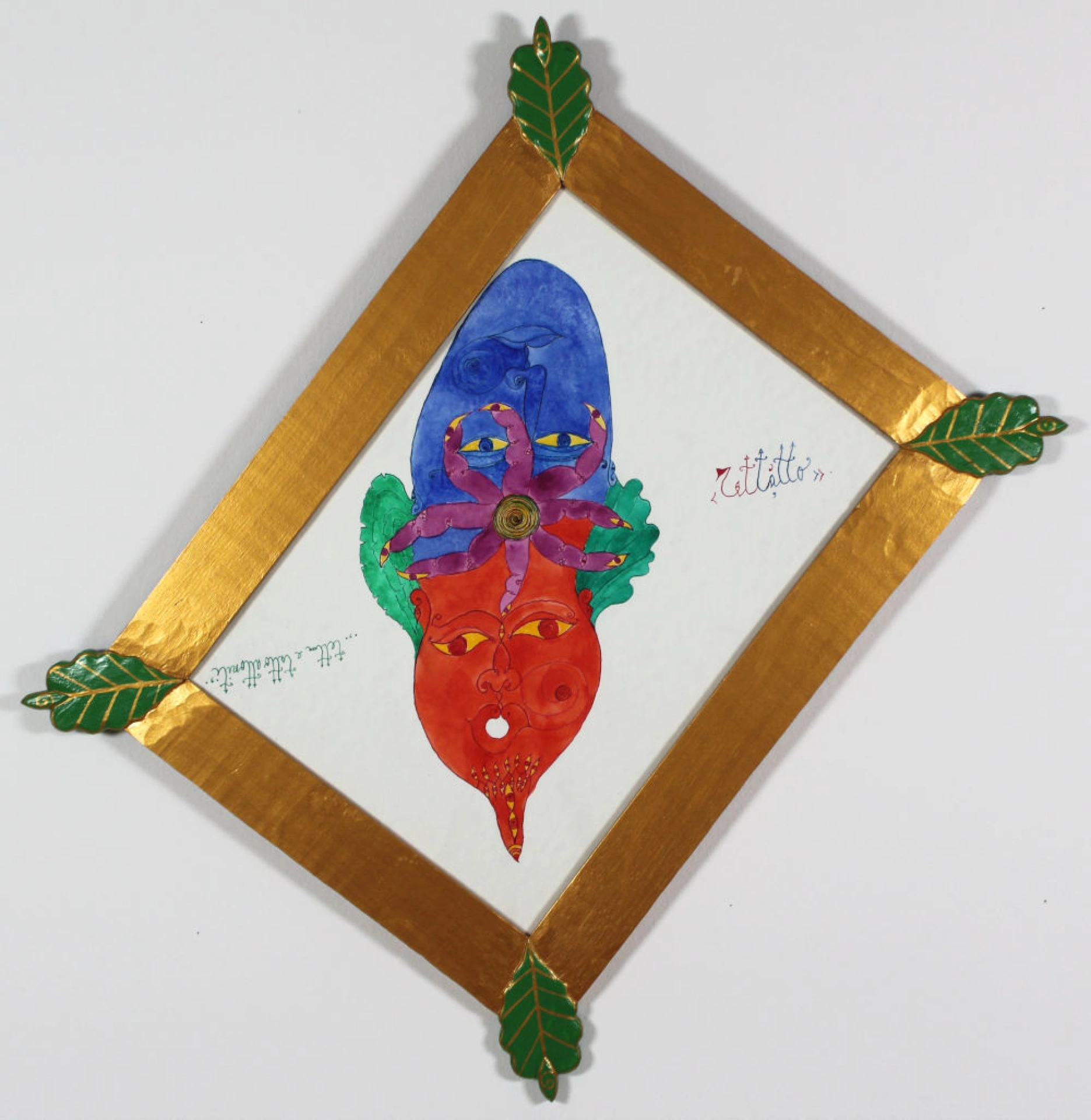
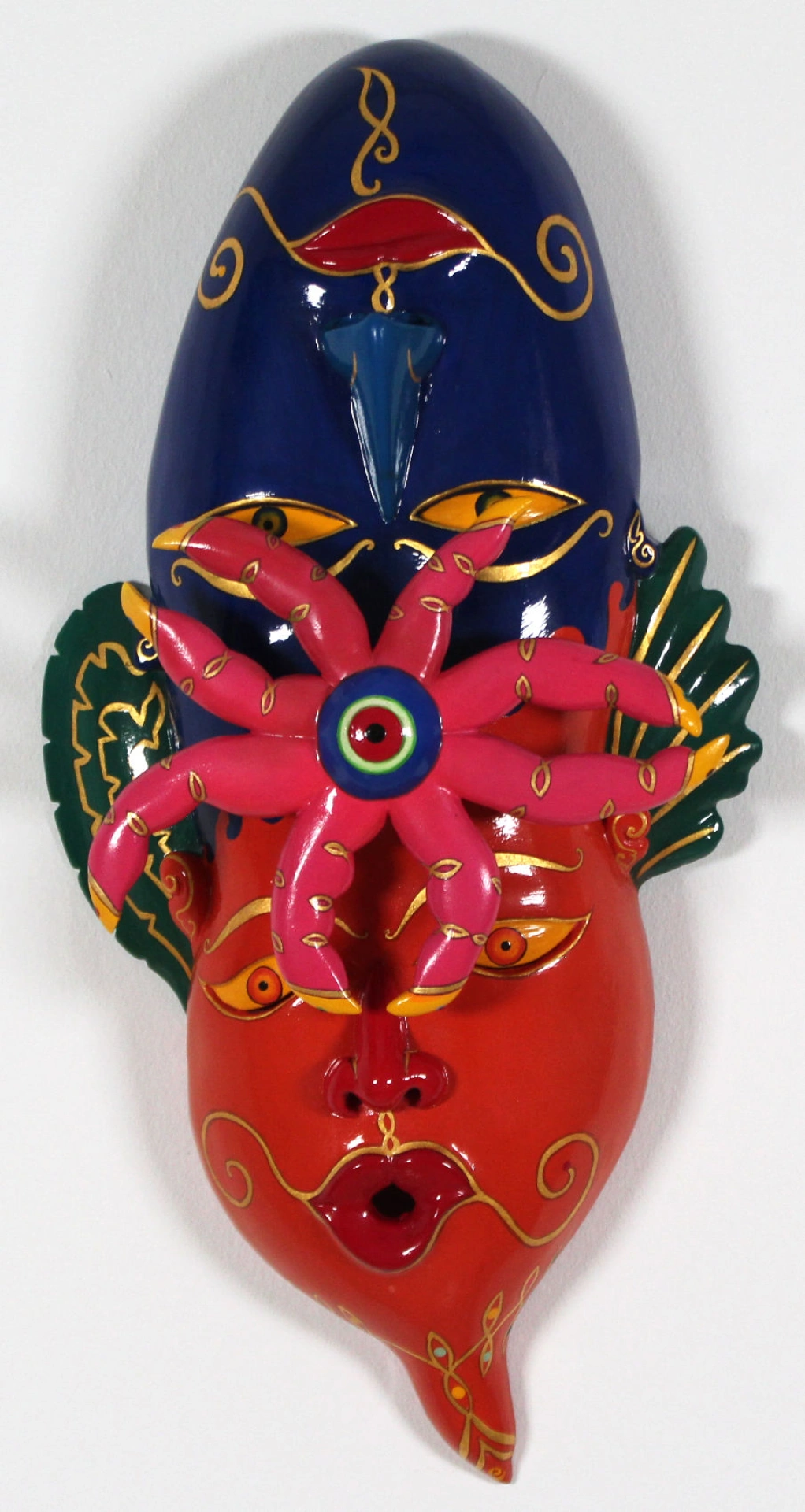
As is typical for this body of work, the piece is composed of two sections—an upper and a lower part—each featuring a face: the upper one blue, the lower one red. On either side, aligned with the midpoint between the two faces, are forms resembling ear-like structures, which contain gilded markings. At the center—a relatively rare feature in Ontani’s masks—lies a tentacle-like, helix-shaped form, containing a circular eye whose meaning remains enigmatic.
The deep blue of the upper mask evokes intense, Eastern, and spiritual experiences, while the red of the lower mask suggests strength, sensuality, and earthly passions. Across these masks, gilded, swirling motifs accentuate the mouths—the upper one appearing indifferent, the lower one, sensual. It is therefore no coincidence that Ontani places the blue section at the top—that is, toward the "transcendent"—while placing the red section at the bottom—that is, toward the "terrestrial."
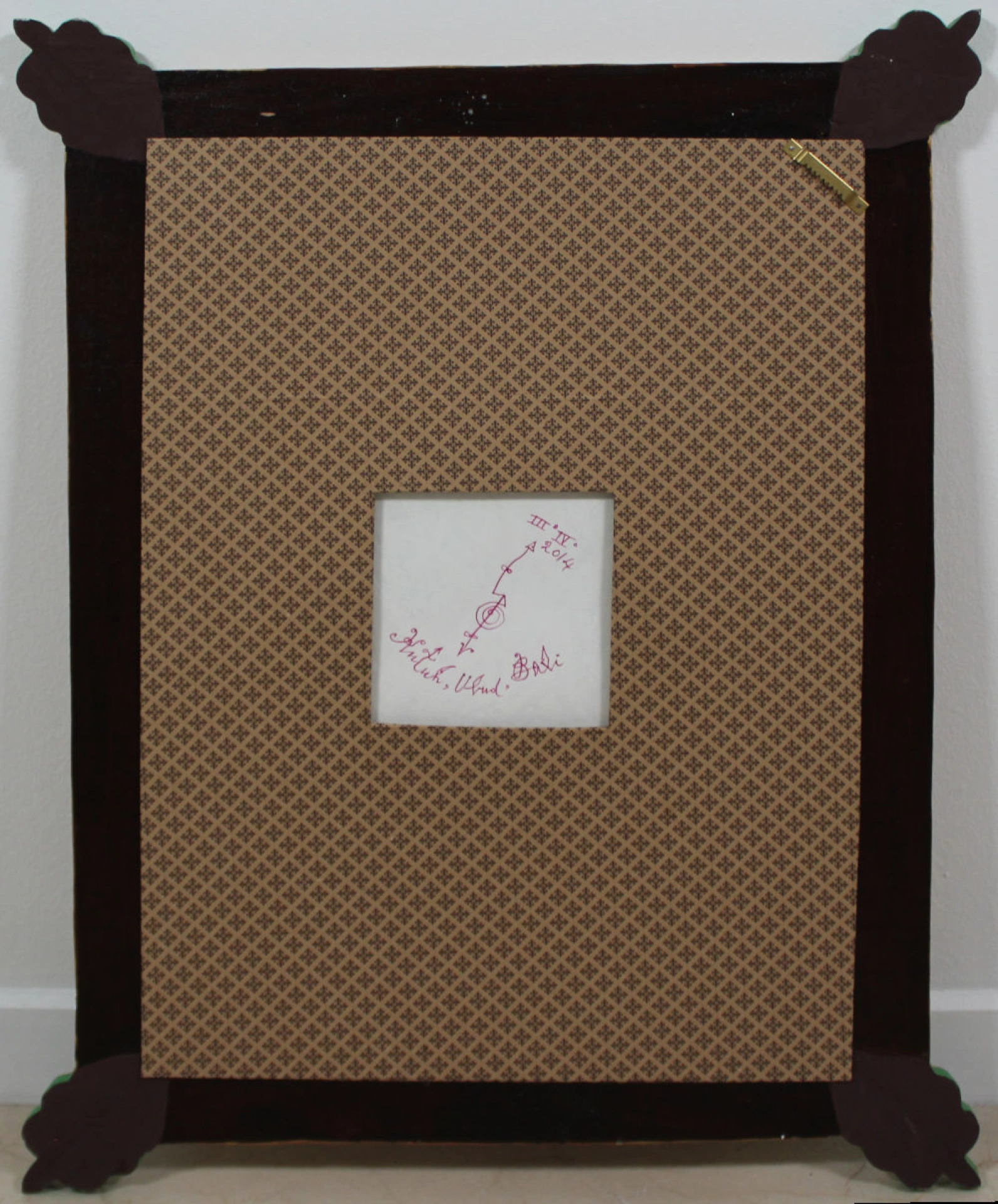
This watercolor stands apart from the artist’s other masks in that it features a flat frame adorned with carved alder (ontano) leaves at the corners. The alder is a tree to which the artist frequently alludes in his work, owing to the phonetic similarity to his own surname, "Ontani."